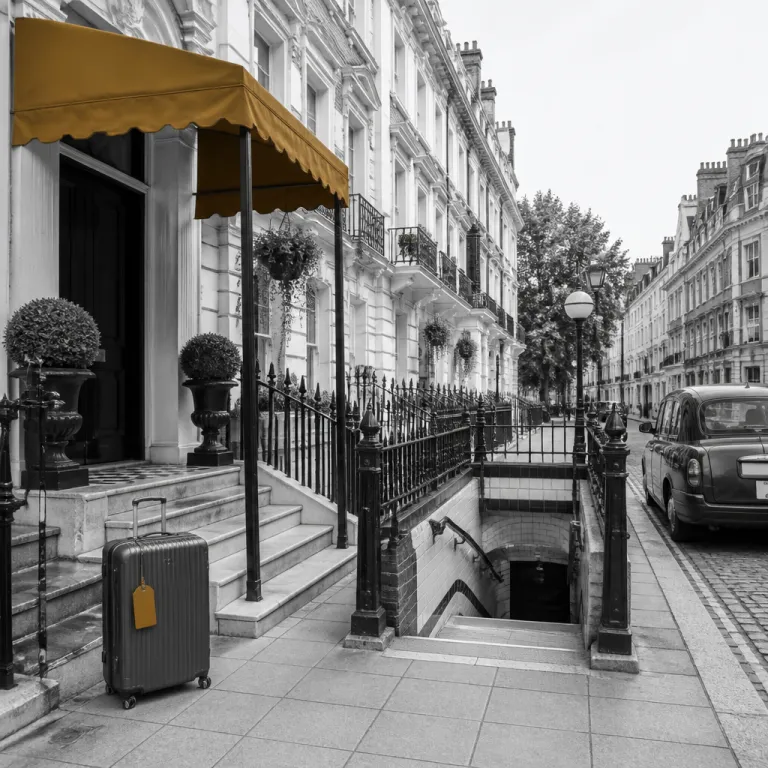
Why mastering the London Underground transforms your hotel stay
Choosing the right hotel in London is only half the story. Your real comfort depends on how easily you can travel between your room in London and the places you want to see, using the London Underground as your daily backbone. When you understand a few essential London Tube travel tips and how the network fits together, the whole city suddenly feels smaller and every journey on the London Tube becomes calmer.
Think of the Tube as an invisible extension of your hotel lobby, because the nearest underground station often matters more than the view from your room. When you compare properties, always find their exact location on a London Underground map and check how many minutes it takes to walk to at least one underground station on a main line such as the Central, Jubilee, Victoria or Piccadilly. A hotel that is a five minute walk from a busy station can save you twenty minutes on every trip, which quickly adds up over a long weekend or a full week in London.
Many first time visitors focus on famous names like Oxford Circus or King’s Cross, but you should avoid choosing a hotel only because it sits beside a landmark station. Often the best option is a quieter street that is a short minute walk from a less crowded underground station, where you can board trains more easily at peak times and return late at night without fighting through heavy crowds. When you plan your London travel this way, every Tube journey feels more like a smooth extension of your hotel experience, rather than a stressful dash across town.
Choosing a hotel by Tube line, not just by neighbourhood
For a smart London Underground strategy, start with the lines rather than the postcodes. Decide which sights you most want to visit in London, then look at an Underground map and circle the lines that serve them directly without too many changes. This line first approach is one of the most powerful London Tube tips for anyone booking a hotel, because it keeps your daily route simple and your journey times predictable.
If your itinerary centres on the West End theatres and Soho restaurants, staying near Piccadilly Circus, Leicester Square or Covent Garden stations on the Piccadilly and Northern lines keeps your journey times short. Travellers focused on museums in South Kensington and shopping in Knightsbridge often find that a hotel near Gloucester Road or South Kensington underground station in Zones 1–2 offers the best balance between convenience and calmer streets. For business trips that run Monday to Friday around the City or Canary Wharf, look for hotels close to the Jubilee, Elizabeth or Northern lines, where a direct train can turn a stressful commute into a predictable ten minute trip.
When you compare hotels online, do not skip content that lists the nearest Tube stations and walking distances, because those details are crucial for planning every route. Many booking pages now show a small Underground map or at least a link to maps, but if they do not, open the official London Underground map separately and plot your own route from hotel to meeting or museum. This extra five minute check can help you avoid awkward interchanges with lots of stairs, and it often reveals a better station choice just one more minute walk away, especially if you prefer step free access or quieter platforms.
Cards, fares and payment: making every journey cost effective
Once you have chosen your room in London, the next step is to decide how you will pay for every Tube journey. Transport for London, the public body that operates the London Underground, strongly encourages passengers to use either an Oyster card or a contactless bank card for the best value. Their own guidance states clearly, “Use a contactless payment card or Oyster card for the best fares,” and current fare tables show that pay as you go is usually cheaper than buying paper tickets.
An Oyster card is a reusable smart card that you can load with credit at Underground stations, visitor centres and some shops, and it works across the Tube, buses, the Docklands Light Railway and most London trains in the city zones. If you already have a bank card that supports contactless payments, you can simply tap that card contactless on the yellow readers at the start of your journey and again at the end, letting the system calculate the correct fare automatically. Daily and weekly caps mean that after a certain spend, further travel within the same zones is effectively free, which is particularly useful if you plan to visit London for several days and use the Tube frequently.
Families or groups often mix payment methods, with one person using an Oyster card and another using a contactless card, but each traveller must have their own card to board through the gates. Remember to tap in and tap out on every trip, because failing to touch the card at either end can result in a higher default fare that quickly erodes any savings. Among all the simple London Underground tips, this habit of always touching the card at the start journey and end of each route is the one that protects your budget most reliably.
Timing, peak hours and how to avoid the worst crowds
Even the most elegant hotel lobby feels less appealing if you arrive flustered from an overcrowded Tube. To keep your London travel calm, pay close attention to peak times on the London Underground and plan your journeys around them whenever possible. Rush hours typically fall on Monday to Friday between about 7:30 and 9:00 in the morning and again from roughly 17:00 to 19:00 in the evening, when trains and stations are at their busiest.
During these peak times, platforms at central stations such as Victoria, Waterloo and London Bridge can become extremely crowded, and you may need to let one or two trains go before you can safely board. If your schedule allows, start your journey slightly earlier or later, which can transform a cramped ten minute ride into a comfortable fifteen minute trip with space to breathe. Guests travelling with children, luggage or mobility concerns should especially avoid the sharpest peaks, because escalators, lifts and long passageways can feel overwhelming when thousands of commuters move at once.
When you cannot avoid travelling at busy times, use a few practical Tube travel tips to make the experience smoother. Stand on the right on escalators and keep your luggage close, leaving the left side clear as an informal Tube stand lane for people who walk. On platforms, check the electronic boards for train times and consider walking along the platform to board a carriage that looks less crowded, which often happens near the ends rather than by the main stairways.
Navigation, etiquette and safety from hotel door to Tube platform
Good manners on the Tube are not just about politeness, they also keep the system moving. One of the most valuable London Underground tips is to let passengers exit the train before you try to board, because this simple habit speeds up every stop and reduces jostling. When you wait beside the doors rather than directly in front of them, you help the flow and make the journey more pleasant for everyone.
Inside the train, move down the carriage instead of stopping near the doors, especially at busy underground stations where many people need to board quickly. If you are standing, hold on to a rail and keep bags between your feet, leaving seats free for others and avoiding trip hazards in the aisle. Visitors often find it helpful to download an Underground map to their phone, but printed maps are still available at many stations and visitor centres if you prefer a physical guide.
From a safety perspective, the London Tube network is generally well monitored, with staff, cameras and clear signage throughout most stations. Still, keep valuables secure, avoid blocking exits and follow any instructions from staff, particularly during service changes or late at night. When you return to your room in London after a long day, you will appreciate how these small habits made each route feel orderly rather than chaotic.
Planning routes from your hotel: practical tools and real world examples
Before you even arrive in London, you can plan your first Tube journey from airport to hotel in just a few minutes. Use an official Underground map or one of the many digital maps to trace your route from the arrival station to the nearest underground station for your chosen hotel. This advance planning means that when you land, you already know which train to board and where to change, instead of trying to find everything on the spot.
For example, if you stay near Paddington, you might arrive on the Elizabeth line or Heathrow Express, then walk a short minute from the mainline platforms to the Underground station to connect with the Bakerloo or Circle lines. A guest whose room in London is near Tower Hill could take the same Elizabeth line to Liverpool Street, then change to the Circle or District line for a quick final journey. In both cases, checking the route and times in advance helps you avoid unnecessary changes and long walks through complex interchange stations, especially during peak times when corridors feel busiest.
When you plan to visit London attractions such as the British Museum, Tate Modern or the Tower of London, always check for planned engineering works that might affect your chosen line. Transport for London publishes detailed information on closures and reduced services, and station staff at ticket halls or visitor centres can help you find alternative routes if your usual train is not running. Among all the practical London Underground tips, this habit of checking service updates the night before can save you from last minute stress and rushed changes on the platform.
Key figures that shape your London Underground experience
- The London Underground carries around five million passenger journeys on a typical day, according to Transport for London, which explains why platforms feel especially busy at peak times.
- The network currently operates 11 lines serving 272 stations across Greater London, giving hotel guests a wide choice of areas that still offer fast Tube access.
- The system has been in continuous operation since the nineteenth century, making it the world’s first underground railway and a central part of London travel culture.
- Electric trains running on dedicated tracks allow the Underground to reduce surface traffic congestion, which shortens average journey times compared with many road based routes.
- Recent upgrades to station facilities and increased use of contactless payments have significantly improved boarding speed and reduced queues at ticket machines for visitors.
FAQ: practical London Underground travel tips for hotel guests
What is the best way to pay for Tube travel from my hotel?
The most cost effective method is to use either a contactless bank card or an Oyster card, because both benefit from daily and weekly fare caps across the London Underground and most trains within the city zones. You can buy and top up an Oyster card at Underground stations and visitor centres, while a contactless card works immediately if your bank supports it. Always tap in and out at the start and end of each journey so the system can charge the correct fare.
How can I avoid crowds on the Tube when travelling to and from my hotel?
Try to plan journeys outside the main weekday peaks of roughly 7:30 to 9:00 and 17:00 to 19:00, when commuters fill trains and platforms. If you must travel at those times, allow extra minutes, stand on the right on escalators and move down inside the carriage to make boarding easier for others. Choosing a hotel near a slightly quieter underground station, even if it is a short minute walk further, can also reduce crowding on your regular route.
Are there any essential etiquette rules I should follow on the London Underground?
Yes, a few simple habits make a big difference to everyone’s journey. Stand on the right on escalators, let passengers exit before you board and keep bags close to your body rather than blocking seats or aisles. Inside the train, keep noise low, avoid eating strong smelling food and be ready to offer your seat to those who need it more.
How do I choose a hotel location that works well with the Tube?
Look for accommodation that is within a five to ten minute walk of at least one Underground station on a major line that serves your key destinations directly. When comparing options, check a London Tube map to see how many changes you would need for your most frequent journeys, such as between hotel, office and main attractions. Often a slightly less central address with a simpler route can be better than a famous postcode that requires multiple interchanges.
Where can I get reliable information about service changes and maps?
Transport for London provides up to date information on line closures, delays and planned engineering works through station noticeboards, staff announcements and digital channels. You can pick up a printed Underground map at many stations and visitor centres, or download a version to your phone before you travel. Checking these resources each evening helps you adjust your plans and keep every journey between your hotel and the city running smoothly.